

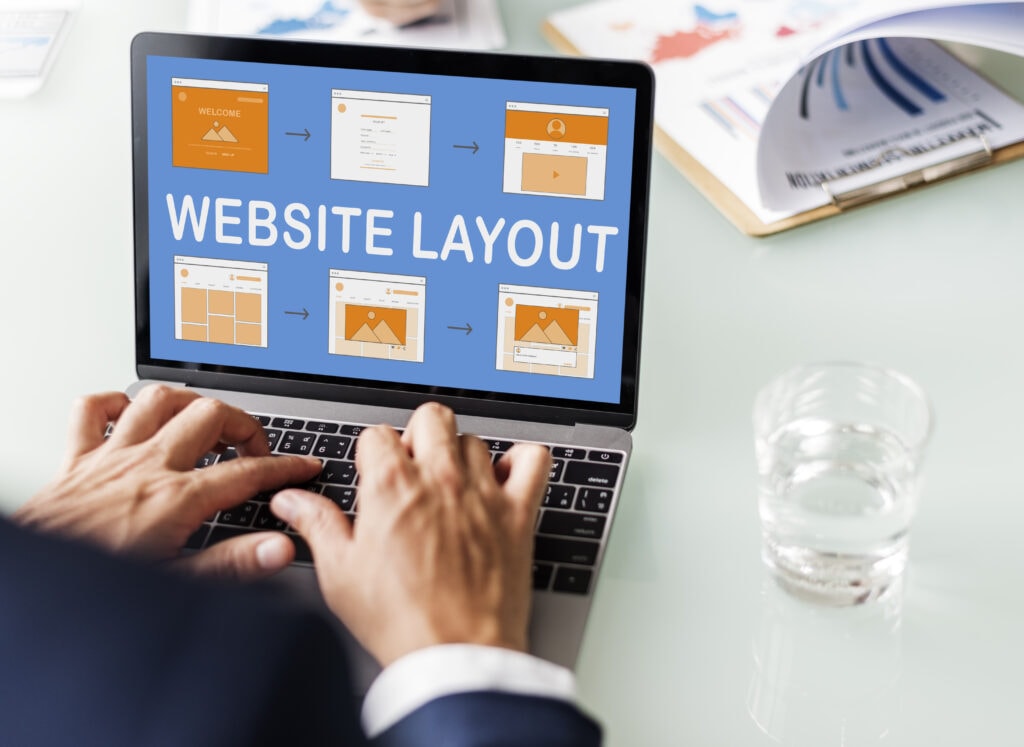
It’s not enough to drive traffic to your website. If your product or service pages don’t convert, even the best SEO strategy or ad campaign will fall short. Many businesses focus on getting people to the page but overlook the structure and layout that turn interest into action. Certain page layouts consistently outperform others because they follow proven patterns that align with how people search, scan, and decide. By understanding these patterns and applying them strategically, you can transform your product and service pages into powerful sales tools.
The Role of Page Layout in Conversions
Every visitor lands on your page with limited attention and a question in mind: “Is this what I’m looking for?” Studies show that users make a decision about your site within about half a second. Layout is the key to keeping them on your site. A clear structure reduces friction, highlights value, and helps visitors take the next step without confusion.
Think about the way people consume content online. They aren’t going to read every page like a book. They’re going to skim, so placing emphasis on the places their eyes naturally look ensures you get your message across. A well-structured page anticipates this behavior, creating a flow that communicates value in seconds and builds trust with each scroll.
The “Hero First” Pattern
One of the most effective layout strategies begins with the hero section. This is the area at the very top of the page, often the only part a visitor sees before deciding to scroll or leave.
A winning hero layout includes a clear headline that states the value proposition, a supporting subheadline for context, and a call-to-action button placed prominently above the fold. Strong visuals reinforce the message, whether it’s a product image, an explainer graphic, or a simple background that emphasizes clarity.
If your page doesn’t communicate what you offer and why it matters in that window, users will bounce. The hero-first approach ensures clarity and encourages visitors to stay engaged.
The “Problem-Solution-Proof” Pattern
Another proven layout follows the natural psychology of decision-making. People identify with a problem, seek a solution, and look for evidence before committing. Structuring your page around this journey creates a persuasive flow.
First, clearly articulate the problem your customer is facing. This draws them in by showing you understand their challenges. Next, explain or show how your product or service solves their problem. Use proof (like customer testimonials, statistics, or case studies) to add credibility to your argument.
When presented in this sequence, the layout mirrors the thought process of a buyer. They feel understood, see how your offering addresses their need, and gain confidence from external validation.
The “Visual Demonstration” Pattern
Humans process visuals about 60,000 times faster than text, which is why layouts that emphasize demonstration often lead to higher conversions. Instead of telling people how your product works or why your service matters, show them.
This pattern relies on imagery, videos, or infographics strategically placed alongside content. For example, a SaaS company might embed a short demo video near the top of the page, while a service provider could use a simple diagram that outlines their process. These visuals reduce uncertainty and help potential customers imagine the experience of using your solution.
The key is to keep visuals clear and relevant. Using too many decorative graphics is a major pitfall of web design and actually masks your message. Purposeful visuals enhance understanding and make your product or service memorable.
The “Trust Builder” Pattern
Even the most exciting product description can fail to bring visitors in if they don’t trust you. That’s why some of the highest-converting layouts prioritize social proof. Trust signals reassure customers that they’re making a safe choice and that others have already experienced success with your brand.
This pattern integrates testimonials, star ratings, case studies, certifications, or partner logos directly into the page’s flow. The placement of these elements matters. Positioning reviews close to calls to action, for example, provides reassurance at the exact moment a customer is deciding whether to click.
Trust-building layouts are especially effective in industries where credibility is a major concern, such as professional services, healthcare, or high-ticket eCommerce. By making social proof a prominent part of the design, you reduce hesitation and make the path to conversion smoother.
Balancing Design with SEO and Performance
While layout patterns are essential for conversions, they must also work in conjunction with SEO and technical performance. A beautifully designed page won’t help your business if it loads slowly, isn’t mobile-friendly, or fails to rank in search results.
That means optimizing every page for speed, accessibility, and structured content. Headlines and subheadings should include relevant keywords without sacrificing readability. Images and videos must be compressed for fast loading. The design should adapt seamlessly to mobile devices, where more than half of traffic now originates.
The best product and service pages strike a balance: persuasive layouts that follow proven patterns, supported by SEO best practices and technical optimization. When design and performance come together, the result is a page that not only attracts visitors but also converts them into paying customers.
Turning Layouts into Sales Engines
At first glance, the idea of “layout patterns” might sound like design theory. But in practice, these patterns are backed by data and psychology. They reflect how real people scan, evaluate, and decide online. Businesses that follow these proven structures consistently see higher conversions, better engagement, and more revenue from the same amount of traffic.
The right pattern depends on your audience and goals. Some industries thrive with hero-first clarity, while others require problem-solution storytelling or heavy reliance on social proof. The common thread is intentionality. Every section of the page should serve a purpose, guiding the visitor toward a confident decision.
Partner with Experts in Conversion-Focused Design
Designing product and service pages that sell requires strategy. By combining proven layout patterns with performance optimization and brand alignment, you can create pages that turn visitors into customers.
Want service and product pages that convert more visitors into customers? Effect Web Agency designs high-performance websites with layouts built to sell. Contact us today to start optimizing your pages.